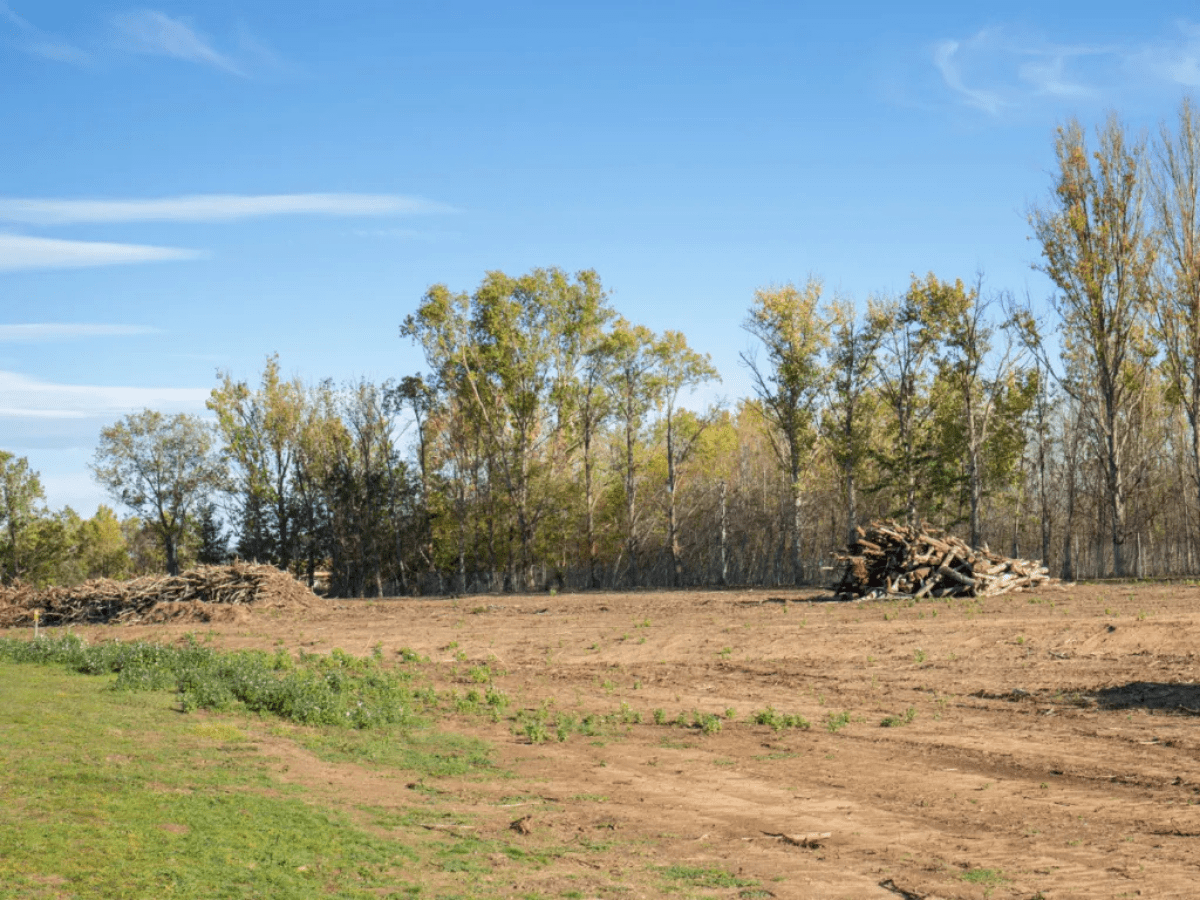

Selling land in Texas can be a profitable opportunity. But here’s what most folks don’t realize: you could be paying a significant portion of your profits to Uncle Sam if you’re not careful.
I’ve been buying and selling properties across the Lone Star State for over two decades, from the rolling hills of Fredericksburg to the sprawling suburbs of Plano. I’ve seen too many landowners get unexpectedly impacted by capital gains taxes that could’ve been avoided with the right strategies.
Here’s the thing about Texas. In Texas, there is no state capital gains tax, which means you will only be required to remit capital gains taxes to the federal government. That’s already a huge advantage over states like California or New York. But federal taxes can still take a serious bite out of your proceeds.
Let me walk you through the strategies that actually work. Not the theoretical stuff you’ll read in tax textbooks, but the real-world approaches I’ve used to help hundreds of Texas landowners keep more money in their pockets.
Texas Land Sale Capital Gains Tax Strategies and Planning Guide
Before we explore specific strategies, you need to understand what you’re dealing with. The long-term capital gains tax rates are 0%, 15%, and 20%, depending on your income and the type of asset. But that’s just the federal side.
The key is timing and structure. I’ve watched clients in Austin save tens of thousands simply by waiting a few extra months to close. Others in Houston have used installment sales to spread their gains across multiple years, keeping themselves in lower tax brackets.
Your location within Texas matters too. Whether you’re dealing with ranch land in Bandera County or commercial property in Richardson, the same federal rules apply. But the local market conditions can affect your strategy timing.
Understanding Capital Gains Tax Rules for Texas Real Estate Transactions
Capital gains tax hits when you sell property for more than you paid. Simple enough. But the devil’s in the details.
Short-term capital gains refer to profits earned from the sale of an asset held for less than a year, whereas long-term capital gains refer to profits derived from the sale of an asset held for more than a year. This distinction is crucial. Depending on your income, the tax rate for short-term capital gains could be significantly higher (up to 37%) than the tax rate for long-term capital gains (up to 20%), which can impact your overall tax burden.
I’ll be straight with you: most people don’t plan ahead. They decide to sell and then worry about taxes later. That’s backward. Smart investors in places like The Woodlands and Sugar Land start planning their exit strategy from day one.
The cost basis calculation is where many folks trip up. Your basis isn’t just what you paid for the land. It includes closing costs, title insurance, survey fees, and any improvements you made. Keep those receipts. I’ve seen landowners in Collin County miss out on thousands in deductions because they didn’t track their expenses properly.
Long-Term vs. Short-Term Capital Gains Tax Implications in Texas
The difference between short-term and long-term capital gains can be significant. Short-term gains (held 1 year or less) are taxed at ordinary income rates, up to 37%. Long-term gains (held over 1 year) are taxed at lower rates of 0%, 15%, or 20%.
| Category | Short-Term Capital Gains | Long-Term Capital Gains |
|---|---|---|
| Holding Period | 1 year or less | More than 1 year |
| Tax Rate | Ordinary income tax (up to 37%) | 0%, 15%, or 20% |
| Tax Treatment | Same as regular income | Preferential (reduced rates) |
| Impact on Profit | Higher tax burden | Lower tax burden |
| Strategic Advantage | Limited | Significant tax savings potential |
| Timing Sensitivity | Less flexible | Requires careful planning (365 days+) |
A client in Katy nearly sold land at 11 months. Waiting just one more month saved over $40,000 in taxes.
Remember, the 1-year rule means 365 days from purchase. Timing your sale carefully can significantly reduce your tax burden while taking advantage of market conditions.
Cost Basis Calculation Methods for Texas Property Sales
Your cost basis is your foundation for calculating gains. Most people get this wrong. It’s not just the purchase price.
and survey. Start with what you paid. Add closing costs, attorney fees, title insurance, and survey costs. If you made improvements, those count too. But regular maintenance doesn’t. Replacing a fence on ranch land in Bandera? That’s an improvement. Mowing the grass? That’s maintenance.

I worked with a landowner in Williamson County who’d owned 50 acres for fifteen years. She thought her basis was the $100,000 she’d originally paid. After going through her records, we found another $35,000 in legitimate additions to the basis. That saved her over $5,000 in taxes.
Keep detailed records from day one. I tell all my clients to create a file for each property. Every receipt, every improvement, every expense that might qualify. You’ll thank yourself later.
The stepped-up basis rule is huge for inherited property. If you inherit land, your basis becomes the fair market value on the date of death, not what the original owner paid. I’ve seen families in places like Southlake inherit property worth $500,000 that grandpa bought for $50,000. Their basis? The full $500,000.
Primary Residence Exemption Benefits for Texas Homeowners
The primary residence exemption is probably the most powerful tool in the tax code. If you’re selling your primary residence, you may be eligible to exclude up to $250,000 (single filers) or $500,000 (married filing jointly) in capital gains, provided you meet the following IRS criteria: you must have owned and lived in the home as your primary residence for at least two of the last five years before the sale.
This works even if you have land around your house. I had clients in Dripping Springs who sold their home plus 10 acres. The house qualified for the exemption, reducing their taxable gain significantly.
The two-out-of-five-year rule is flexible. You don’t need to live there continuously. You could live there for two years, rent it out for two years, then move back for a year before selling. As long as you hit the two-year requirement within the five-year window, you qualify.
Here’s a strategy I’ve used with clients who own large properties: if part of your land was used as your primary residence, you might be able to allocate the exemption to that portion. It requires careful documentation and professional guidance, but it can work.
Like-kind Exchange Requirements for Texas Land Sales
Section 1031 exchanges are effective strategies for serious investors. The IRS allows Texas investors to sell rental properties, business properties, and land that was purchased for investment purposes and defer all capital gains taxes via IRC Section 1031.
The “like-kind” requirement is broader than most people think. In the exchange world, “like-kind” does NOT mean you must exchange an apartment project (investment property) for another apartment project or raw land for raw land. It means that you must exchange real estate for real estate. This permits, within the categories of “held for investment” or “used in your trade or business,” the exchange of apartments for land, office buildings for apartments, etc., as long as the old properties sold and the new properties acquired are either held for investment or used in a trade or business.
I’ve helped clients exchange everything from ranch land in East Texas for apartment buildings in Dallas to commercial property in Houston for farmland in the Panhandle. The flexibility is remarkable.
The timelines are strict, though. You must identify potential replacement properties within 45 days following the transfer of the relinquished property. Purchase of the replacement property must be completed within 180 days following the transfer of the relinquished property.
I can’t stress this enough: start planning before you sell. I’ve seen deals fall apart because investors waited until after closing to start looking for replacement property. The 45-day identification period goes by fast, especially in competitive markets like Austin or San Antonio.
Installment Sale Method for Reducing Capital Gains Tax Liability
Installment sales can be brilliant for spreading out tax liability. Instead of taking all your proceeds at closing, you receive payments over several years. This can keep you in lower tax brackets and reduce your overall tax burden.
I used this strategy with a client who sold 100 acres in Montgomery County. Instead of taking $1 million at closing and facing a high tax burden, we structured it as $200,000 per year for five years. This kept him in the 15% capital gains bracket instead of jumping to 20%.
The interest rate requirements can be tricky. The IRS has minimum rates you must charge. But in a low-interest environment, this can still work well for both buyer and seller.
Not every buyer will agree to installment terms. But in Texas, where we have a lot of family buyers and investors with long-term horizons, it’s often possible. I’ve found ranch buyers in particular are often amenable to these structures.
Opportunity Zone Investments as a Capital Gains Tax Deferral Strategy
Opportunity Zones offer some of the most aggressive tax benefits in the code. You can defer capital gains by investing in qualified Opportunity Zone funds, and if you hold the investment long enough, you can eliminate taxes on the appreciation entirely.
Texas has numerous Opportunity Zones, particularly in Houston, Dallas, San Antonio, and Austin. I’ve worked with clients who sold land in Westlake and invested the proceeds in Opportunity Zone projects in downtown Austin. The tax benefits can be substantial.
The timing is crucial. You have 180 days from the sale to invest in a qualified opportunity fund. Miss that deadline, and you’ve lost the opportunity forever.
The 10-year hold requirement is serious. This isn’t a short-term strategy. But for investors with long-term horizons, the ability to completely eliminate taxes on appreciation is powerful.
Qualified Small Business Stock Exemptions in Texas Real Estate
Section 1202 provides up to $10 million in tax-free gains on qualified small business stock. While this doesn’t directly apply to land sales, it can be part of a broader strategy.
I’ve worked with developers who’ve structured their land development companies to qualify for Section 1202 treatment. It’s complex and requires careful planning from the start, but the potential benefits are enormous.
The five-year holding requirement and active business test make this challenging for passive land investments. But for developers and active real estate businesses, it’s worth exploring.
Charitable Remainder Trust Benefits for Land Sale Tax Planning
Charitable remainder trusts (CRTs) can be powerful tools for landowners with significant appreciation and charitable inclinations. You can defer capital gains by moving appreciated assets into a Charitable Remainder Trust (CRT) before you sell them.
I worked with a ranching family in the Hill Country who’d owned 500 acres for 40 years. The land was worth $2 million, but their basis was only $200,000. By contributing the land to a CRT, they avoided immediate capital gains taxes, received an income stream for life, and got a charitable deduction.
The trust sells the property tax-free and reinvests the proceeds. You receive payments for life (or a term of years), and the remainder goes to charity. It’s not for everyone, but for the right situation, it’s incredibly effective.
Step-Up Basis Advantages Through Estate Planning in Texas
The step-up in basis at death is one of the most powerful wealth transfer strategies available. When you inherit property, your basis becomes the fair market value at death, not what the decedent paid.

I’ve worked with multi-generational ranching families who’ve used this strategy for decades. Instead of selling appreciated land during their lifetime and paying capital gains, they hold it until death. The heirs inherit with a stepped-up basis and can sell immediately with little or no tax.
Texas doesn’t have a state estate tax, which makes this strategy even more attractive. Texas does not have an inheritance tax or an estate tax, which would otherwise apply when a property is passed to heirs after a property owner’s death.
The federal estate tax exemption is currently high. Federal estate tax may still apply to larger estates that exceed the federal exemption threshold, which is currently $13.61 million for individuals in 2024 and $13.99 million in 2025. For most Texas landowners, this means no federal estate tax either.
Tax-Loss Harvesting Techniques for Real Estate Investors
Tax-loss harvesting involves selling properties at a loss to offset gains from other sales. Tax-loss harvesting is a strategy where investors sell underperforming assets at a loss to offset capital gains, thereby reducing taxable income. If total capital losses exceed capital gains, you can deduct up to $3,000 per year against ordinary income.
I had a client in Tarrant County who sold one piece of land for a $100,000 gain and another for a $60,000 loss in the same year. The loss offset most of the gain, significantly reducing his tax liability.
The wash sale rule doesn’t apply to real estate as it does to securities. But you still need to be careful about related-party transactions and other anti-abuse rules.
Timing matters. You generally want to harvest losses in the same year as your gains. But losses can be carried forward indefinitely if they exceed your gains in any given year.
Depreciation Recapture Rules for Texas Commercial Land Sales
When you sell commercial property that you’ve depreciated, you’ll face depreciation recapture. The IRS taxes recaptured depreciation at a maximum rate of 25%, which can increase your overall tax liability when selling investment properties.
This doesn’t apply to raw land since land isn’t depreciable. But if you have buildings, improvements, or equipment on the land, depreciation recapture can be significant.
I worked with a client who sold a commercial property in Richardson. The capital gain was taxed at 15%, but the depreciation recapture portion was taxed at 25%. Proper planning could have minimized this impact through a 1031 exchange.
Keep detailed depreciation records. I’ve seen situations where taxpayers couldn’t prove their depreciation basis, resulting in higher recapture than necessary.
Conservation Easement Tax Benefits for Texas Landowners
Conservation easements can provide significant tax benefits while preserving land for future generations. You donate development rights to a qualified organization and receive a charitable deduction for the value of those rights.
I’ve worked with ranchers in Central Texas who’ve used conservation easements to reduce their estate tax exposure while keeping their land in agricultural use. The key is working with qualified appraisers and conservation organizations.
The IRS has tightened rules around conservation easements in recent years. Make sure you’re working with experienced professionals who understand the current requirements.
The charitable deduction can be substantial, sometimes 30-50% of the property’s value. But the easement is permanent, so make sure you’re comfortable with the restrictions.
Self-directed IRA Real Estate Investment Strategies
Self-directed IRAs can be used to invest in real estate, potentially providing tax-deferred or tax-free growth. While you can’t use IRA funds to buy property you currently own, you can use them for new acquisitions.
I’ve helped clients use self-directed IRAs to buy land that they later sell to their development companies. It requires careful structuring to avoid prohibited transaction rules, but it can be effective.
The UBIT (Unrelated Business Income Tax) rules can be complex when using debt-financed property in an IRA. But for cash purchases, it’s more straightforward.
Delaware Statutory Trust Options for Capital Gains Deferral
Delaware Statutory Trusts (DSTs) have become popular replacement properties for 1031 exchanges. They allow you to own a fractional interest in institutional-quality real estate without the management responsibilities.
I’ve had clients exchange raw land for interests in DSTs that own shopping centers, apartment complexes, and office buildings across Texas and the nation. It provides diversification and professional management.
The minimum investments are typically $100,000 or more, so it’s not for small transactions. But for larger land sales, it can provide an excellent 1031 exchange solution.
Atlas Land Buyers has worked with several DST sponsors to help clients identify suitable replacement properties. The key is finding sponsors with strong track records and properties that match your investment objectives.
Timing Strategies for Minimizing Capital Gains Tax Impact
Timing can make a huge difference in your tax liability.
- Income management: Selling assets during years when your taxable income is lower may result in a reduced tax rate on capital gains.
- Long-term planning: Holding investments longer may qualify you for lower long-term capital gains rates.
- Year-end strategy: Adjusting income near year-end can help optimize your overall tax bracket.
- Market awareness: Understanding market cycles can help guide better selling decisions.
I worked with a business owner in Frisco who was planning to retire. Instead of selling his commercial land in his final high-income year, we waited until after retirement when his income dropped significantly. This moved him from the 20% capital gains bracket to the 15% bracket.
The end of the year can be particularly strategic. If you have control over your other income sources, you might be able to manage your total income to optimize your capital gains rate.
Market timing matters too. While you cannot time the market perfectly, understanding cycles can help inform your decisions.
Professional Tax Planning Services for Large Land Transactions
For significant land sales, professional guidance is essential. I’ve seen too many landowners try to handle complex transactions themselves and make costly mistakes.
A good team includes a CPA with real estate experience, an attorney familiar with tax law, and a qualified intermediary if you’re doing a 1031 exchange. Don’t skimp on professional fees: they’re usually a tiny fraction of the taxes you might save.
Cash Land Buyers in Dallas, TX, works with a network of qualified professionals across Texas. We can connect you with CPAs in Dallas, attorneys in Houston, and qualified intermediaries throughout the state. The key is finding professionals who understand both real estate and tax law.
Start planning early. The best strategies often require advance planning. Once you’ve already sold, your options are limited.
Documentation Requirements for Capital Gains Tax Exemptions
Documentation is crucial for any tax strategy. The IRS doesn’t take your word for it; they want proof.
For the primary residence exemption, keep records showing when you lived in the property. Utility bills, voter registration, driver’s license changes: anything that establishes residence.
For 1031 exchanges, the documentation requirements are extensive. Purchase agreements must include specific language, identification letters must be properly executed, and all timelines must be met precisely.
I maintain detailed files for all my transactions. Every receipt, every document, every communication. It might seem excessive, but when the IRS comes calling, you’ll be glad you have everything organized.
We Buy Land in Texas can help you organize your documentation from the start of the process. We’ve seen what works and what doesn’t, and we can guide you through the requirements.
Frequently Asked Questions
How Can I Avoid Paying Taxes When Selling Land in Texas?
Holding the property for more than a year to qualify for long-term capital gains rates, using a 1031 exchange to defer taxes by reinvesting in like-kind property, or using the primary residence exemption may reduce taxes. Texas has no capital gains tax, so federal taxes apply.
Can Land Be Sold Without Capital Gains Tax?
You can sell land without capital gains tax in some cases. Selling for less than your cost basis means no gain, no tax. The primary residence exemption can eliminate gains up to $250,000 ($500,000 for married couples). A stepped-up basis on inherited property often eliminates gains.
What Would Be the Capital Gains Tax on a $300,000 Profit in Texas?
No state capital gains tax in Texas, so you’d pay federal taxes on a $300,000 long-term capital gain. You’d pay $45,000 in federal capital gains tax at 15%. The 20% bracket is $60,000. High earners may pay 3.8% net investment income tax on over $200,000.
How Much Capital Gains Tax on a Texas Land Sale?
Texas doesn’t tax capital gains, so you pay federal taxes. The rate depends on income and land ownership duration. Gains under a year are taxed as ordinary income up to 37%. Long-term gains are taxed 0%, 15%, or 20% depending on income.
Look, navigating capital gains taxes on land sales doesn’t have to be overwhelming. I’ve walked hundreds of Texas landowners through these strategies, from small residential lots in Pflugerville to massive ranch properties in West Texas.
The key is planning ahead and understanding your options. Whether you’re looking at a 1031 exchange, installment sale, or timing strategy, the right approach can save you thousands, sometimes tens of thousands, in taxes.
Atlas Land Buyers has been helping Texas landowners maximize their proceeds for years. We understand both the tax implications and the local markets from the Panhandle to the Gulf Coast. If you’re considering selling land and want to explore your options, we’re here to help. No pressure, no obligation: just honest guidance from folks who’ve been doing this for decades.
Contact us to learn more about how we can help you navigate your land sale while minimizing your tax burden. Sometimes the best investment advice is knowing when and how to sell.
Helpful Texas Blog Articles
- Selling Hunting Land In Texas
- What Documents Do I Need to Sell Land in Texas?
- What Happens If I Pay Someone Else’s Land Taxes in Texas?
- How to Sell Agricultural Land to a Developer
- How to Get a Land Appraisal in Texas
- How to Sell Land in a Rural Area in Texas
- How to Avoid Capital Gains Tax on Land Sale in Texas
- How Much Does It Cost to Subdivide Land in Texas
- How to Transfer Land Title After a Sale
- Heir Property Rights When Selling Land
- Land Broker vs Real Estate Agent and Which One You Need
- Land Clearing Costs in Texas
- How to Price Land for Sale in Texas