

Pull open a random drawer in almost any American home, and you might find it. A folded sheet of paper, dense legal text, a notary stamp, a few signatures. Somewhere in the middle sits a metes-and-bounds description that reads like directions from a 1920s surveyor. Most people have never read their land deed cover to cover. Fewer still could explain what it says. So they’re flying blind on one of the biggest assets they own. That gap turns into a real problem when it’s time to sell, refinance, hand the place to an heir, or defend ownership in court. Your deed answers most of those questions on one page.
What Is a Land Deed and Why Does It Matter?
Lose track of your deed, or use the wrong type for a transaction, and you can cloud your property’s title for decades. Buyers walk when a title search turns up an unresolved lien. Every transfer down the line inherits that mess. A gap in the ownership chain does the same thing. Lenders won’t fund a mortgage against a property with a murky title. The consequences ripple outward fast.
A deed is a written legal instrument that transfers ownership of real property from one party to another. Two parties show up at nearly every event. The grantor is the current owner handing the property over. The grantee receives it. A deed signed under duress, or forged outright, can unwind an entire closing, because the grantor’s signature is what makes the transfer official. Without a properly executed deed on file, nobody can prove who owns what. That ambiguity costs money to resolve.
Validity takes several essential elements. Operative words of conveyance, a description of the property, signatures, delivery, proper formatting and execution, and legal capacity of all parties. State laws pile their own wrinkles on top of those fundamentals. A deed that’s perfectly legal in one state might be defective in another, especially around notarization requirements.
A while back, I worked with a widow in Mesquite, Texas. She’d inherited her late husband’s vacant lot on the east side of town. For two years, she paid the taxes on it reluctantly, never having wanted to hold raw land in the first place. Then she went to sell and found the deed still sat in her husband’s name alone. Sorting that out took weeks of probate work before we could close. Check your deed’s status before you need it, and you skip that headache entirely. It also puts you in a better spot if you decide to sell your land for cash instead of holding it.
What Does a Land Deed Look Like?
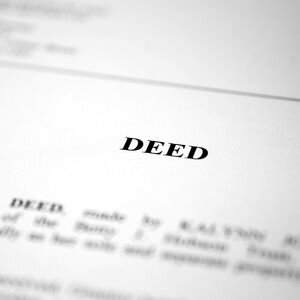
Sit down at the kitchen table and imagine I’m sliding one across to you. Right away, you’ll notice it doesn’t look like a contract. No multi-page boilerplate. No numbered clauses. Usually a single page, sometimes two, printed on standard white paper in clean black text. Official, plain, and deceptively simple.
To be legally binding, a property deed has to meet strict state requirements. It must be in writing, and it needs a valid legal description. The grantor signs it, a notary acknowledges it, and it gets delivered to the grantee. Recording the deed with the county recorder’s office is a standard requirement, too.
At the top, you’ll see the document type spelled out: “Warranty Deed,” “Quitclaim Deed,” or one of a handful of other variations. Below that are the names of the grantor and grantee in full. Then comes the consideration clause. Even on a million-dollar sale, it may read “for ten dollars and other valuable consideration.” That’s a legal convention, not a typo. A legal description of the property follows, and it’s usually the longest, most technical section. At the bottom sits the grantor’s signature, a notary seal, and sometimes witness signatures, depending on the state.
Once it’s filed, a deed is public record. Anyone can pull up your deed at the county recorder’s office. That’s by design, and it’s how buyers verify a property’s ownership history.
Key Components Found in Every Property Deed
What parts of this document actually matter, and what’s just boilerplate?
Some parts of a deed carry more legal weight than others, though every part matters. Granting clauses are the engine of the whole document. These operative words of conveyance transfer ownership from seller to buyer. They show the seller means to transfer ownership and the buyer means to accept it. A vague phrase here, or a missing one, gives somebody grounds to challenge the transfer.
A legal description identifies the real property precisely, often by lot, block, subdivision, or metes-and-bounds. It’s more exact than the street address. Public records use that language to locate the parcel. Your street getting renamed or renumbered happens more than you’d think, and it won’t invalidate the legal description, which still holds.
The consideration clause states the value exchanged. Some deeds use nominal consideration, something like “for $1 and other valuable consideration.” In many jurisdictions, that phrasing keeps the actual sale price off the face of the deed.
Validating a deed takes the grantor’s signature, and many jurisdictions require notarization, where a notary public confirms the authenticity of signatures. Some states also want witnesses or an acknowledgment clause confirming the identities of the parties signing. Then you file the deed with the appropriate county or state government agency for it to be recognized as a legal document.
What Are the Different Types of Land Deeds?

A seller once transferred property to a family member with a quitclaim deed after a divorce, figuring it was a formality. Three years later, a lien from before the divorce surfaced on that title. The family member had no legal recourse because the deed carried no warranties at all. Old liens hide surprisingly well.
Sellers land in that spot more often than they realize. Your choice of deed type decides how much protection travels along with the ownership of the property. Four types show up in most residential transactions.
A general warranty deed is the gold standard. Sellers promise a clear title going all the way back through the property’s history, and they defend the buyer against any claim that surfaces, no matter how old.
The special warranty deed narrows that promise. Its grantor backs the title only for the stretch they owned the property. Anything from before their ownership is the buyer’s problem. That distinction matters at foreclosure sales and estate transfers.
A quitclaim deed carries zero title guarantees. The grantor makes no warranties about holding clear legal title, takes on no obligation to defend the title against claims or debts, and simply transfers whatever ownership interest they may have. Use it between family members, or in a divorce settlement where title disputes are already known. Keep it out of an arm’s-length sale.
The deed of trust works differently again, because it’s tied to a mortgage. A property owner conveys legal title to a trustee, who holds it as security for a lender until the loan is repaid. If the borrower defaults, the lender in many states can foreclose without a court proceeding, a process called non-judicial foreclosure.
General Warranty Deed vs Quitclaim Deed: What Is the Difference?
An estate attorney called me about siblings splitting a parent’s property after the estate had settled. One sibling wanted the house, the other wanted cash. They used a quitclaim deed to move fast. Then a buyer came along, their lender flagged the chain of title, and the sibling trying to sell had to demonstrate from scratch that she’d received a clean interest.
Warranty deeds and quitclaim deeds are built for completely different situations. A warranty deed gives the buyer a much higher level of protection. Only a warranty deed guarantees that the seller has the full right to transfer ownership without any liens or judgments attached. A quitclaim deed is really just a release of whatever claim the grantor holds, nothing more.
Guarantees of any kind are absent from a quitclaim deed. That leaves a buyer exposed to finding out later that the person who sold it had no legal right to sell the property at all. It isn’t a theoretical risk, since plenty of deed fraud schemes are built on exactly that.
Families use quitclaim deeds to move property quickly when no money changes hands. Divorcing spouses are removing one name from the title. Parents gifting land to a child. Siblings sorting out an estate. An open-market sale involving a lender isn’t an appropriate use. Most lenders won’t accept a quitclaim deed as proof of clear title, so a buyer relying on a mortgage loan needs a warranty deed or title insurance to make the transaction work. You can learn more about property deed types and how they interact with real estate law.
If you’re in the middle of sorting out title issues connected to a sale, the team at Atlas Land Buyers works with all deed types. We can often close even when the title situation is complicated. When we buy land, an unusual deed type is something we work through with you.
How to Get a Copy of Your Property Deed
Some sellers assume the deed is in a filing cabinet somewhere. Maybe it is, though losing the original copy doesn’t mean losing ownership of the property. Your deed exists somewhere else, too.
Every recorded deed is a public document. Your county’s register of deeds or recorder’s office holds a copy. Plenty of jurisdictions now offer online access through searchable databases. Some counties still want in-person research or a mailed request for older documents.
The process is usually straightforward. Search the county recorder’s online portal by address or owner name, find your deed’s instrument number, and request a certified copy. Fees vary by county and are typically modest. A real estate attorney can pull it faster if you’re in a hurry, though you’ll pay for the convenience.
One pattern I keep seeing: sellers who haven’t looked at their deed in years get surprised by what’s on it. An easement runs along the back of the property. A restrictive covenant limiting what a buyer can do with the land. A name misspelling that has to be corrected before a clean transfer can happen. Read the document before you list, and you save time later.
How to Update or Transfer a Land Deed
Recording a new deed doesn’t cancel the old one. Both stay in the public record. A chain of title is exactly that, a chain, each link referencing the one before it. Each deed transfer adds a link, and the whole chain has to hold. Owners who assume the old deed “goes away” at closing are mistaken, and that misunderstanding has derailed transactions.
To transfer a deed, the grantor drafts a new one, signs it in front of a notary, and records it with the county. A deed drafted and signed but never recorded leaves a gap in the public record, and the transfer sits unfinished. That gap causes real problems for the next owner.
Common reasons to update or transfer a deed include adding or removing a spouse after marriage or divorce. Moving a property into a trust calls for a new deed, too. So does conveying land to an heir outside of probate, or correcting an error in the legal description. Each situation has its own preferred deed type. Getting that choice wrong creates title defects down the road.
An attorney or licensed title company should prepare the new deed. Generic online templates sometimes get the legal description or the conveyancing language wrong, and fixing a defective deed costs far more than getting it right the first time. For any transfer involving a mortgage, check with your lender first. I’ve seen closings stall over this. Some loan agreements carry a due-on-sale clause that can accelerate repayment when ownership changes.
Atlas Land Buyers has handled ownership transfers in all kinds of situations, from straightforward sales to properties where the chain of title needed untangling first. Owners who need to sell land fast in Dallas often reach out to us in the middle of a transfer like that. If you’re unsure where your situation falls, reach out and ask.
Can Someone Steal Your Land Without You Knowing?
Sixty-three percent of real estate association professionals reported awareness of title fraud or deed theft in their markets within the prior twelve months, according to the NAR’s 2025 Deed and Title Fraud Survey.
These scams cluster in central cities and suburban areas, and they frequently involve vacant land rather than owner-occupied properties. Only 12% of title fraud cases in the past year involved owner-occupied homes, while 62% involved vacant land. Land you’re not actively using or visiting is your most vulnerable asset.
The mechanics are simple. Scammers sign a property owner’s name on a deed transferring the place to themselves or a shell company. Then they either sell it to an unknowing buyer or take out loans against it. A forged transfer looks legitimate on paper until somebody checks. A quitclaim deed is the weapon of choice, since it’s easy to fabricate and file.
If your deed is stolen through forgery, you’ll likely need to file a quiet title action in court to restore your ownership. Uncontested cases cost between $1,500 and $5,000 in legal fees. Contested ones cost far more and can drag on for a year or longer. Prevention is the better path. Sign up for property alert notifications through your county recorder’s office, free in most counties now, and you get an email anytime a document is filed against your property.
How to Store and Protect Your Land Deed Safely
Keeping your deed in a shoebox under the bed seems fine until a flood, a fire, or a burglary happens. The original isn’t irreplaceable the way a family photo is, since the recorded version lives at the county. Recovering from a lost or damaged deed still costs time and money you shouldn’t have to spend.
A fireproof safe or a bank safe deposit box is the standard option. Safe deposit boxes run around twenty to sixty dollars a year at most banks, and a deed is exactly the kind of document worth that. Keep a scanned digital copy in a secure cloud folder as backup. Title documents scan cleanly and store well. The digital version can’t substitute for the original in every legal context, but it speeds up recovery if you ever need a new certified copy.
Start with free county recorder alerts to monitor filings on your property. Freeze your credit with all three bureaus. Review your property records at least once a year. Those steps give you a reasonable early warning system against fraud without paying for a monitoring service.
An heir in Tyler, Texas, came to me about a parcel that had sat empty for roughly a year while her father settled into assisted living. She’d found the deed tucked in a hall closet folder. It listed her father as the sole owner with no transfer-on-death designation. Capacity windows close faster than families expect, so getting a proper transfer in place before her father lost legal capacity was the right move. We helped her work through her options before that window shut. We buy land in Tyler and the counties around it, so calls like hers are common.
If your deed situation is tangled, or you’re just not sure who currently holds legal title, Atlas Land Buyers works with sellers in exactly that spot. We can look at the deed with you before you decide anything about the property.
Frequently Asked Questions
What Should a Land Deed Look Like?
Picture a single page of clearly printed text on white paper. That’s what most property deeds look like. The page carries the names of the grantor and grantee, a granting clause that conveys ownership, a legal description of the property, the consideration paid, and the grantor’s notarized signature. Once signed and notarized, the deed has to be delivered to the grantee. Recording it with the county makes the transfer legally effective.
What Is the Difference Between a Land Title and a Land Deed?
A deed is the physical document used to transfer ownership from one party to another. A title is the legal concept of ownership itself, the right to possess and use the property. You transfer a deed. You hold a title. Someone claiming “clear title” means there are no outstanding liens, claims, or debts clouding their ownership rights. The deed is the evidence. The title is the ownership right itself.
Who Holds the Deed to Land?
After a property sale closes, the buyer receives the original deed. Once it’s recorded with the county recorder or register of deeds, it joins the public record, and the county keeps a permanent copy. Your lender doesn’t hold your deed if you have a mortgage. They hold a lien or deed of trust as security for the loan, while the deed itself belongs to you as the property owner.
Can You Give Me an Example of a Deed?
A typical general warranty deed reads something like this in plain terms: “I, the grantor, for valuable consideration received, hereby grant and warrant to the grantee the following described property,” and so on. Then comes the legal description, using lot and block numbers or metes-and-bounds coordinates. The grantor’s signature and a notary acknowledgment block close out the deed. Exact language and required clauses vary by state. Working with a real estate attorney or licensed title company for your own jurisdiction is the safest approach.
If you’ve got questions about your deed, a transfer you’re trying to sort out, or a property you’re thinking about selling, we’re here to talk it through. No pressure, no obligation. Just a real conversation about your situation and what your options actually look like.